11th June 2026
Let’s Talk Grief: What is Grief?


Grief can be difficult to describe, because it is not just one feeling. It can affect emotions, thoughts, sleep, motivation, concentration and day-to-day life in ways that may feel confusing or overwhelming.
In this article – part of our Let’s Talk Grief series – Jenni Tompkins, Bereavement Service Lead at Nottinghamshire Hospice, explores what grief can feel like, why there is no right or wrong way to grieve, and when bereavement support may help.
On the surface at least, we all know the meaning of the word ‘grief’, but the truth of it is that this tiny word is supposed to describe an absolutely massive experience – where do we even start in trying to understand it?
Grief is not just one feeling
Trying to describe ‘grief’ is a little bit like trying to describe ‘love’. It’s difficult because it isn’t just one thing – it’s many things all at once. It is layered, multi-faceted, and not something that one simply gets over.
Any feeling can be associated with grief, and some of those will be tangled together, too, so it can make the process of coming to terms with a death very difficult. And I think that’s the first point, we don’t talk in terms of getting over it or moving on. We talk about learning to live with it. What we’re working towards is adjusting to a whole new reality, and that isn’t easy or quick. Sorry about that…
How grief can affect day-to-day life
What is confusing to a lot of people, especially in the intensity of the first few weeks, is how widely and how deeply a bereavement can impact on day-to-day life. Things like the ability to concentrate on even simple things, the motivation to carry out their usual tasks or talk to people (even the ones they like) can all be negatively impacted. There can also be physical ‘symptoms’ associated with grief, particularly things like aches and pains, fatigue, feelings of ‘can’t be bothered’, or ‘what’s the point?’. Sleep might also be affected, whether that’s sleeping too much or too little, either way it will impact on how someone feels.
All of this is normal. It’s not comfortable, in fact, it feels pretty horrible, but I very often tell people that they are not going crazy! This is grief.
When grief feels overwhelming
For most people, these issues will lessen over time, and with the support of family and friends. Sometimes it helps to get back into a routine like going to work, going out, seeing people again. Even if it feels like an effort to begin with. Some people find that the intensity of their feelings is so overwhelming that it’s impossible to find their way forward, and the future without their person feels terrifying.

Again, this is quite normal, but it can be an indicator that some professional support might be helpful to make sense of these feelings and learn to live with the reality of what has happened.
How do people cope with grief?
One of the questions I get asked most often is how other people cope with their grief.
There isn’t really a single answer to this, because everyone copes in their own way, and there definitely isn’t a right or wrong way to ‘do’ grief.
But there is one thing that I’ve observed, and that is that when people have hobbies, they tend to be able to regulate the intensity of their emotions more readily than those who don’t have any distractions like that. When the emotions of grief feel intense without any distraction or break, it can feel overwhelming, not to mention exhausting! There needs to be some balance – reflecting on the loss is important, but there needs to be something else to distract and focus on alongside that reflection, or it can very quickly lead to that feeling of overwhelm.
Finding the right bereavement support
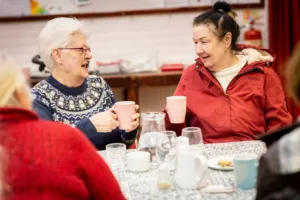
At whatever point in grief a person needs support, we can offer a listening ear and some advice about the support that is available to them. It is always a personal choice whether to opt for one-to-one support or group support, but most people find that they prefer to speak to someone by themselves first. This can be helpful to build some emotional resilience, because in a group setting, hearing about other people’s grief alongside your own can be a bit intense to begin with.
That said, if what someone is really looking for is to find out how other people cope, and make some connections with people in similar situations to their own, a group might be a good place to do that.
There are no rules for grief
There really are no rules for grief. Every grief is as unique as the relationship and the person that is being grieved for. I see my job as helping people to learn to live with their grief and re-discover the joy in their lives. Whatever that looks like to them.
Bereavement support from Nottinghamshire Hospice
If this article has raised anything for you, or if you or someone you know is grieving, you don’t have to face it alone. Nottinghamshire Hospice offers free counselling and emotional support, including one-to-one sessions and peer support groups. Our team is here to help you find the support that feels right for you.
Find out more about our counselling and emotional support here or call us on 0115 962 1222