
30th April 2026
Conversations Around Grief – Dying Matters Awareness Week

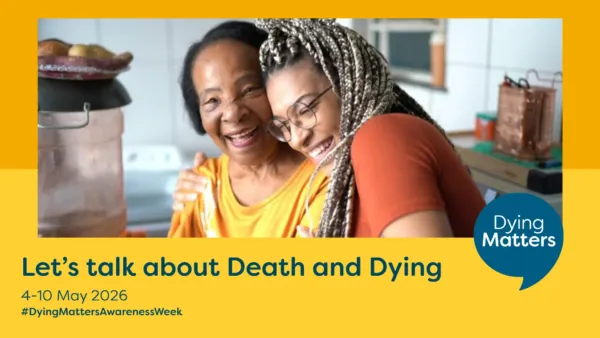
Talking about death and dying isn’t easy, but avoiding these conversations can make grief feel more isolating. In this blog, Jenni Tompkins, Bereavement Services Lead at Nottinghamshire Hospice, explores why we struggle to talk about death, the impact this can have on those who are grieving, and how starting small conversations can help break the silence.
As a culture, we are not good at talking about death and dying. Many of us find it awkward, morbid, uncomfortable, or even downright terrifying. That’s pretty normal, but it does make it difficult to have those important conversations with our friends and family about our wishes or theirs, or even to talk about our bereavements.
Even Professionals Struggle with Conversations About Death
One of the things that continues to surprise me is how many professionals are uncomfortable talking about death and bereavement. Given that it is a universal issue, in that we’re all going to experience it at some point, you’d think that we’d be a bit more prepared. Apparently not! But that’s ok. That’s why it’s so important to bring these issues into everyone’s awareness in a sensitive way, so we can voice the uncomfortable feelings and the fears around death and dying. Hopefully, lessening the intensity of it along the way.
When We Don’t Know What to Say About Grief
In our bereavement support groups, we very often talk about the unintentionally insensitive things that people say when they don’t know what to say to someone who is grieving. Or even worse, how it feels to lose touch with friends or family members because they don’t know how to deal with someone’s grief.
It all comes back to this idea of not being good at talking about it in the first place, so we avoid what makes us uncomfortable, what scares us. There’s nothing wrong with that, but it’s a vicious circle because we can’t avoid it forever! Eventually, it will be us that is feeling alienated by those insensitive comments. Or that faces the pain of secondary loss when the people we thought we could count on disappear from our lives and leave us even more isolated.
Creating Space for Open Conversations About Death
At Nottinghamshire Hospice, we’ve always been passionate about getting the conversation around death and dying started, just to enable people to explore the uncomfortable with people who are reasonably comfortable talking openly about it.
Sometimes people will ask me how we do what we do, how we cope, and I usually joke about falling back on a dark sense of humour and unhealthy coping strategies, but I’m only half-joking.
Having spent a lot of time with our staff and service users, I can honestly say that there is a lot of laughter, and it’s really important. That’s not us denying how uncomfortable or sad or fearful death and dying are, but it’s a way of bolstering our inner resilience so we can do what we do, day in, day out. Coping strategies such as hobbies are also important, but I’d probably recommend the healthy ones!
How to Start Talking About Death and Dying
So, how comfortable are you in talking about death and dying?
Is it something that you avoid?
Do your friends and family know your wishes if the worst were to happen?
Do you know theirs?
It’s ok if you don’t have the answers to these questions, I’m not sure that I do either. What’s important is starting the conversation and not shying away from it if someone else wants to talk about it.
Dying Matters Awareness Week: Starting the Conversation
Use this Dying Matters Awareness week as an opportunity to explore your own feelings around death and dying, so that gradually, bit by bit, we can start to chip away at the culture of silence and fear around this topic, and hopefully become people that embrace life, because we’re not scared of talking about death.
About Dying Matters and Finding Support
Dying Matters is a national campaign led by Hospice UK that works to create an open culture in which we’re comfortable talking about death, dying and grief. Each year, Dying Matters Awareness Week encourages people to have open, honest conversations about the end of life, helping to make these discussions feel a little less difficult.
If this article has raised anything for you, or if you or someone you know is grieving, you don’t have to face it alone. Nottinghamshire Hospice offers free counselling and emotional support, including one-to-one sessions and peer support groups. Our team is here to help you find the support that feels right for you.
Find out more about our counselling and emotional support here or call us on 0115 962 1222